
Dental Implants in Oklahoma City, Oklahoma
A missing tooth, a loose partial, or a bridge that no longer feels secure can make it harder to eat, speak, or feel confident about your smile. At Providence Dental in Oklahoma City, OK, Dr. Londan Davis and our team provide dental implants as one option for replacing missing teeth. We take an education-first approach, which means we explain the process, answer your questions, and give you time to make an informed decision.
Our Oklahoma City, Oklahoma, dental practice can help patients explore teeth replacement options for a single missing tooth, several missing teeth, or a larger area of tooth loss. Dental implants can support an artificial tooth, dental bridge, or denture, depending on the number of teeth being replaced and your individual needs. Depending on your case, Dr. Londan Davis may place the implant in our office or refer you to a trusted oral surgeon for that stage, and our team completes your restoration either way. Patients often tell us that understanding each stage of the process ahead of time makes treatment feel less overwhelming.
Implant treatment is not right for everyone. Your oral health, overall health, medical history, available bone, and other factors can affect your treatment plan. We will evaluate these areas and explain what may be appropriate without rushing you into treatment.
Implant Restoration in Oklahoma City, Oklahoma
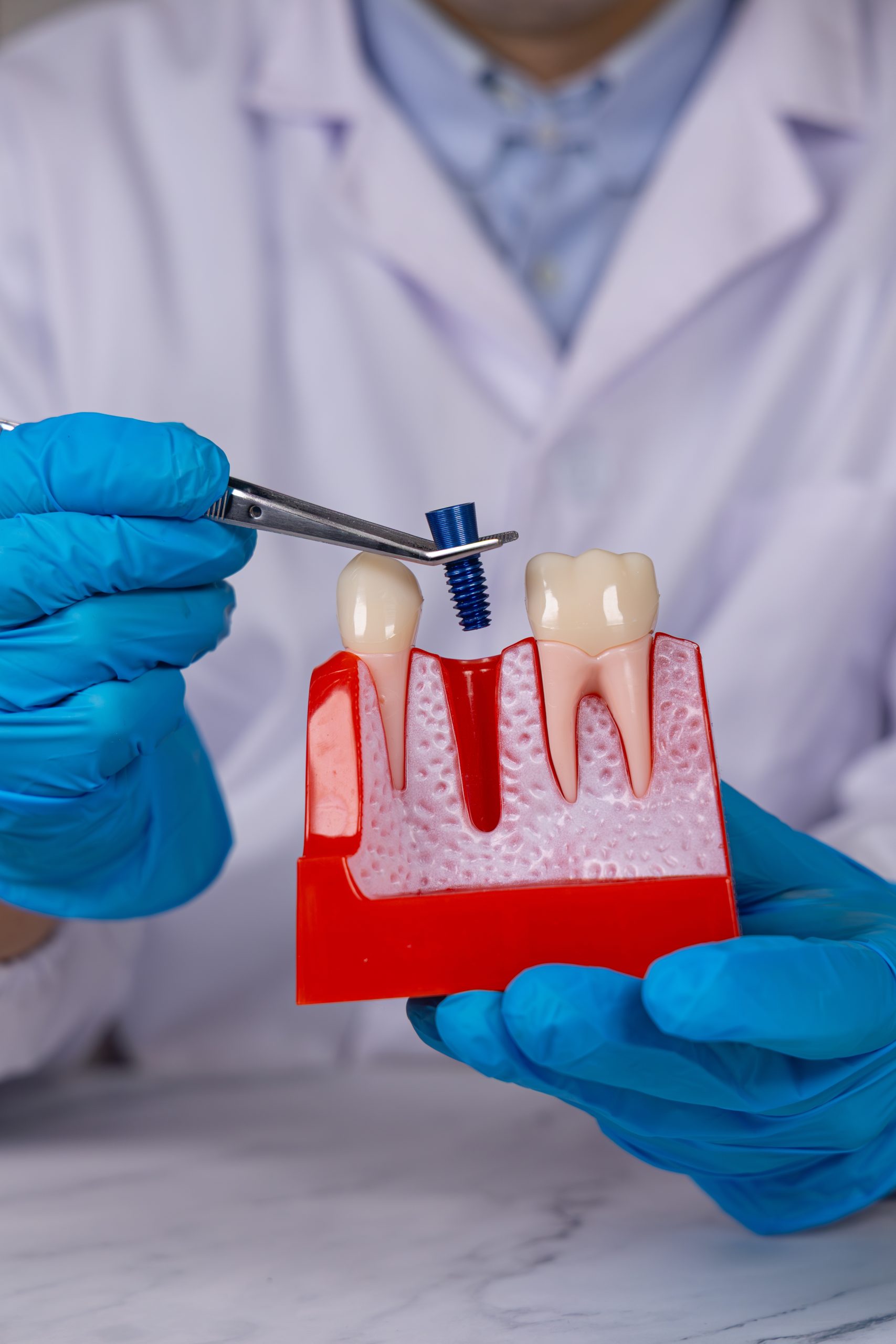
A dental implant has several parts. The implant body is placed in the jawbone and acts as a foundation for the replacement tooth…
Implant-Supported Bridges
An implant-supported dental bridge can replace several missing teeth in the same area…
Implant-Supported Dentures
Implant-supported dentures use dental implants to provide added support for a denture…
How the Dental Implant Process Works
The dental implant process begins with an evaluation. Dr. Londan Davis will review your dental and medical history, examine your mouth, and use appropriate imaging to learn more about your teeth and jawbone. This information helps us determine whether implants may be suitable for your needs.
If dental implant placement is appropriate, Dr. Londan Davis will discuss whether the implant can be placed in our office or whether referral to a trusted oral surgeon is the better option for your case. Many implants use a titanium implant body, although materials and systems can vary. Depending on where placement happens, dental implant surgery is commonly performed with local anesthesia, and the exact approach depends on the individual case.
After implant surgery, the area needs time to heal. During this healing period, the bone can develop a stable connection around the implant. Healing time varies, so we do not promise the same timeline for every patient.
Some patients do not have enough healthy bone for implant placement. Bone loss can happen for various reasons, including changes that occur after tooth loss. In certain cases, a bone graft may be considered before or during dental implant surgery. Dental bone grafts may use different types of graft material, and the source and type should be discussed as part of your care.
Once the implant is ready, a dental abutment and final restoration can be completed as appropriate. Depending on the case, temporary teeth or a temporary crown may be used during parts of treatment, but this varies with the dental implant procedure and the providers involved.
Benefits and Considerations of Dental Implants
Dental implants offer a number of advantages for appropriate patients. Because an implant-supported restoration has a foundation in the jaw, it can provide stable support for a replacement tooth or multiple artificial teeth. Unlike some traditional dental bridge designs, a single-tooth implant may also avoid using neighboring natural teeth for support.
Replacing missing teeth may improve chewing function and help patients feel more comfortable with their smiles. For some people, that can have a positive effect on everyday comfort and quality of life.
However, dental implant placement is a surgical procedure and involves risks. Implant surgery also requires healing and ongoing maintenance. Not everyone is a good candidate, and no responsible dental office can promise a specific success rate for an individual patient.
Your health, bone levels, oral hygiene, smoking or tobacco use, and other factors can affect treatment. Our role is to give you clear dental advice about your individual situation and help you understand both the possible benefits and limitations before making a decision.
Caring for Dental Implants
Dental implants cannot develop cavities, but the gums and bone around them still require attention. Plaque can collect around implant restorations just as it does around natural teeth.
Good oral hygiene includes brushing carefully, cleaning around and between the artificial tooth or teeth, and following the instructions our team provides. Regular professional dental care allows us to check the implant restoration, gums, bite, and surrounding tissues.
Avoiding habits that place unnecessary stress on restorations can also be important. Biting very hard foods or using your teeth to open objects may damage both implant restorations and natural teeth.
With proper care, dental implants are widely used as a long-term tooth replacement option. However, treatment outcomes and longevity vary, and implants and restorations may require maintenance, repair, or replacement over time.
Frequently Asked Questions
Am I a good candidate for dental implants?
Being a good candidate depends on more than having a missing tooth; we consider your oral health, available jawbone, medical history, and ability to maintain good oral hygiene. Some conditions do not automatically prevent treatment, but they may affect planning, so a consultation and examination are needed before we can recommend dental implants.
How long does the dental implant process take?
The dental implant process usually takes place over several stages, and the area often needs time to heal after placement before we complete the final restoration. The total timeline depends on your oral health, healing, and whether bone grafting is needed, and we will explain your expected timeline before treatment begins.
Are dental implants better than bridges or removable dentures?
There is no single tooth replacement option that is best for every patient, since dental implants, a dental bridge, and dentures all work differently. Your remaining natural teeth, bone health, number of missing teeth, and treatment goals can all affect which approach may make sense for you.
Will my dental implant be placed at Providence Dental or by a specialist?
Depending on your case, Dr. Londan Davis, DDS, may place your implant in our office or refer you to a trusted oral surgeon for the surgical stage. Either way, our team manages your evaluation, coordinates your care, and completes your final restoration.
Does dental insurance cover dental implants?
Dental insurance coverage varies widely, and some plans contribute toward parts of the process while others have exclusions or waiting periods. Our team reviews an estimated cost with you before treatment begins and can help you understand your payment options at Providence Dental.
Explore Dental Implants With a Team That Listens
Choosing how to replace missing teeth is a personal decision. At Providence Dental, we believe you should understand the dental implant process, possible benefits, limitations, healing needs, and alternatives before deciding how to move forward.
Our Oklahoma City team will take time to evaluate your needs and explain whether a single implant restoration, implant-supported dental bridge, implant-supported denture, or another option may be appropriate. You will have time to ask questions and understand your treatment plan without pressure. Whether you live in Oklahoma City, OK, or a nearby community such as Edmond, Norman, or Moore, we’re glad to help you find the right path forward.
Call Providence Dental at (405) 691-0836 to schedule a dental implant consultation. Our team will listen to your concerns, explain your options clearly, and help you decide on a next step that makes sense for your smile.